Credit Card Application Rejected Due to Low Income in India – What to Do
Getting a credit card rejection message because of “low income” can feel unfair, especially when you are earning regularly and managing your expenses responsibly. Many salaried professionals and first-time earners in India face this situation.
Income-based rejection is more common than people realise. Banks follow internal eligibility rules, and when your declared income does not meet their threshold, the system automatically declines the application.
The important thing to understand is this: low income rejection does not mean you are permanently ineligible. It simply means the card you applied for did not match your profile.
What Is the Minimum Income Required for a Credit Card in India?
There is no single universal number. Each bank sets its own minimum income criteria depending on the type of card.
Broadly, entry-level credit cards may require a monthly income between ₹15,000 to ₹25,000, while premium cards often expect ₹50,000 or more. Some metro-based banks even apply higher thresholds for applicants living in Tier-1 cities.
This is where many applicants get confused. They assume any salary is enough, but banks classify cards into different risk categories.
Income is only one part of the approval process. For a broader understanding of how banks assess applicants, read our detailed explanation on credit card eligibility in India.
Why Banks Reject Credit Card Applications Due to Low Income
Income is not evaluated in isolation. Banks assess repayment capacity, which includes:
- Net monthly salary (not CTC)
- Existing EMIs or loan obligations
- Credit card outstanding balances
- City of residence
For example, if someone earns ₹28,000 per month but already has two active EMIs consuming ₹12,000, the bank may see limited repayment room. Even though the income meets basic criteria, practical affordability becomes the issue.
Many applicants discover this only after rejection.
Does Low Income Mean Low Credit Score?
No. Income and credit score are separate factors.
You can have an excellent CIBIL score and still face rejection due to income mismatch. Similarly, a high salary does not compensate for poor repayment history.
If your rejection message mentioned both income and credit score, you should review your full credit profile before applying again.
Common Situations Where Income Rejection Happens
Based on observed cases, income-related rejections usually occur when:
- Applicant selects a premium card beyond salary range
- Salary credited is inconsistent
- Recent job change reduces perceived stability
- Income proof submitted does not match bank records
Sometimes even selecting the wrong card variant can trigger automatic rejection.
What To Do After Income-Based Credit Card Rejection
Instead of immediately applying again, take a structured approach.
1. Review the Card You Applied For
Check whether the card was positioned as entry-level, mid-range, or premium. Applying for a lifestyle or travel card with a modest salary often leads to decline.
2. Evaluate Existing EMIs
If your fixed obligations are high, consider reducing outstanding balances before reapplying.
3. Choose Cards Designed for Lower Salary Brackets
Some banks offer basic credit cards specifically tailored for individuals earning ₹20,000–₹30,000 per month.
4. Apply Where You Hold a Salary Account
Banks tend to trust existing customers more because income flow is visible internally.
Can You Get a Credit Card With Low Income?
Yes, but expectations need adjustment.
Options include:
- Entry-level credit cards
- Secured credit cards against fixed deposit
- Add-on card under a family member’s primary card
Secured cards are particularly useful because they rely on your deposit rather than income strength.
How Long Should You Wait Before Reapplying?
After a rejection, it is advisable to wait at least 60 to 90 days before applying again. Frequent applications create multiple credit enquiries, which may further reduce approval chances.
Use this time to improve overall financial stability.
Practical Insight: Matching Card Type to Income Matters
In real banking systems, each credit card product is mapped to a risk segment. Even if two cards look similar, their internal eligibility criteria can be very different.
Choosing the correct segment is often more important than increasing income slightly.
If your monthly income is around ₹25,000 to ₹35,000, it is safer to apply for cards designed for that income bracket. You can check suitable options in our list of best credit card for ₹30,000 salary in India.
Income vs Repayment Capacity – The Real Difference
One important detail that many applicants overlook is that banks do not approve cards based only on income. They approve based on repayment capacity.
Repayment capacity is calculated after considering fixed expenses and liabilities. For instance, if your monthly salary is ₹30,000 but ₹15,000 goes towards rent and EMIs, the effective surplus income becomes limited.
Improving repayment capacity starts with disciplined expense management. Creating a structured plan, as explained in our monthly budget in India guide, can help strengthen your profile.
From the bank’s perspective, issuing additional unsecured credit in such cases increases risk. This calculation happens internally and is rarely explained in rejection messages.
Why City of Residence Can Influence Approval
Income thresholds may differ depending on whether you live in a Tier-1 city like Mumbai or Bengaluru versus a Tier-2 city. Banks factor in average cost of living and historical repayment behaviour by region.
Sometimes two applicants earning the same salary receive different decisions simply because of geographic risk segmentation.
How Employment Type Affects Income Evaluation
Not all income is treated equally. Salaried employees in established companies are often viewed as lower risk compared to freelancers, contract workers, or individuals with irregular income.
If your salary slips show fluctuating credits, the system may flag your profile as unstable, even if your annual income is reasonable.
This does not mean freelancers cannot get credit cards. It means documentation becomes more important.
Secured Credit Cards: A Practical Alternative
For applicants consistently facing income-based rejection, secured credit cards can be a useful stepping stone.
These cards are issued against a fixed deposit. The credit limit is usually linked to the deposit amount. Since the bank holds collateral, income risk becomes less significant.
Many people use secured cards strategically to build a stronger credit profile before applying for regular cards.
Does Increasing Income Immediately Improve Approval?
An increase in salary can improve eligibility, but timing matters. If your income increased recently, banks may still look at past six months of statements.
It is better to wait until updated salary credits are consistently visible in bank statements before reapplying.
How Multiple Rejections Impact Future Applications
Every application generates a hard enquiry on your credit report. Too many enquiries within a short time frame can create a negative signal.
Even if income improves, multiple recent enquiries may lead to further rejection because the system interprets repeated applications as credit-seeking stress.
Spacing out applications reduces this risk.
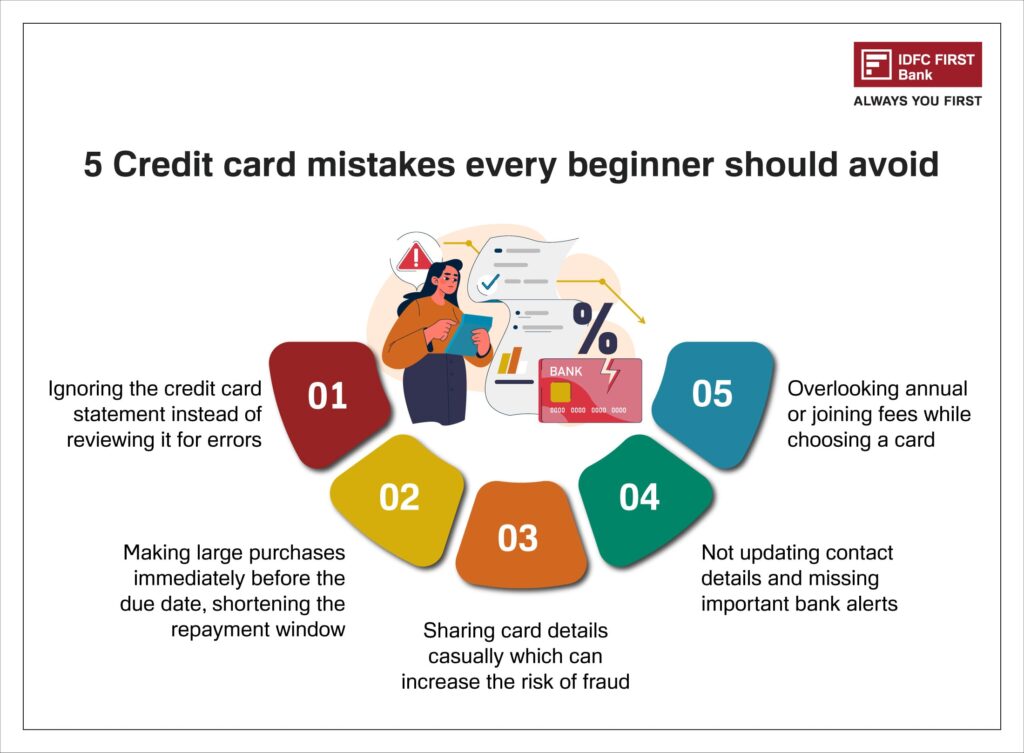
Repeated applications and poor usage patterns often reduce approval chances. These common errors are discussed in our article on credit card mistakes in India.
Documents That Strengthen Your Application
If income-based rejection was unclear, ensure the following documents are accurate and up-to-date before your next attempt:
- Latest salary slips (last 3 months)
- Recent bank statements showing salary credit
- Updated address proof
- Correct employment details
Sometimes simple documentation mismatches cause automated rejection.
Should You Apply Through Agents or Online?
Applying through third-party agents sometimes results in applications being submitted for cards that do not match your income segment.
Direct applications through official bank websites allow you to carefully review eligibility criteria before submission.
It is always better to read minimum income requirements on the official card page rather than relying on verbal assurance.
How to Gradually Improve Credit Eligibility
Improving eligibility is not about sudden changes. It is about gradual strengthening of your financial profile.
- Maintain clean repayment history
- Avoid using more than 30–40% of credit limit
- Reduce outstanding EMIs where possible
- Increase income stability over time
Over six to twelve months, these improvements significantly enhance approval chances.
Income Rejection vs System Decline – Understanding the Difference
Sometimes the rejection reason mentions income, but the actual decline may be system-driven due to internal scorecards.
If your rejection also mentioned credit score concerns, reviewing your credit profile is essential. You can follow the steps explained in our guide on how to improve CIBIL score in India before applying again.
Banks use internal scoring models combining income, bureau score, past banking relationship, and risk filters.
Even small mismatches can result in automated decline without manual review.
This is why selecting the correct product and timing your application is critical.
When to Consider Waiting Instead of Applying
If your salary has recently increased, or you just closed a loan, it may be better to wait a few months for your credit profile to reflect the change.
Applying too early can lock you into another rejection cycle, which delays improvement.
Frequently Asked Questions
Can I get a credit card if my salary is ₹20,000 per month?
Yes, but approval depends on EMI obligations, credit score, and the specific card applied for. Entry-level cards are more suitable.
Will applying again immediately improve my chances?
No. Multiple applications within a short period can negatively impact approval decisions.
Does low income permanently affect eligibility?
No. As income increases or financial obligations reduce, eligibility improves.
Conclusion
Income-based rejection is not a judgement on your financial responsibility. It is a risk-filtering mechanism used by banks.
The key is alignment. Choose a credit card that fits your current income profile, maintain clean repayment behaviour, and avoid repeated applications.
With the right approach, approval becomes far more likely.